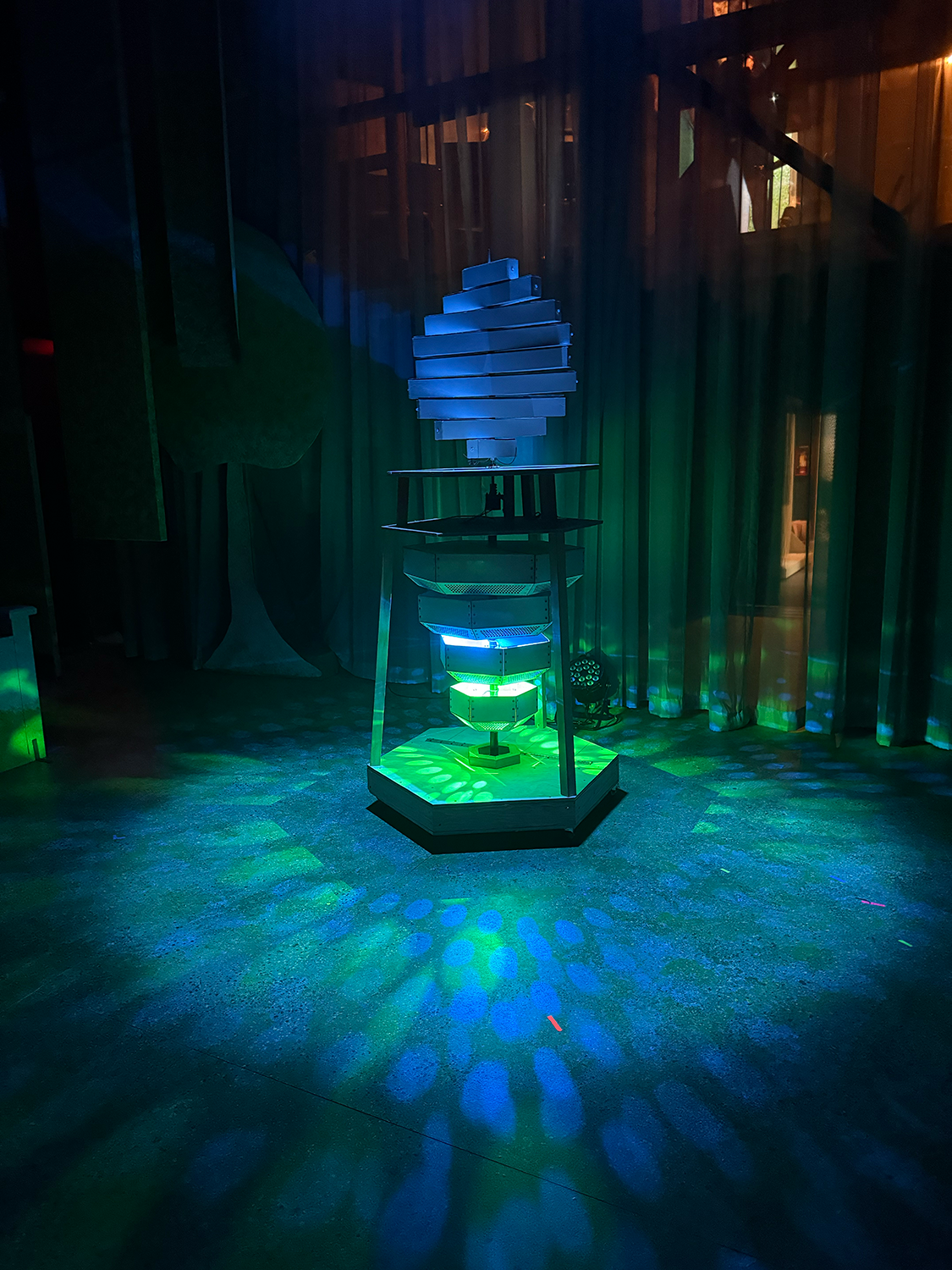
Chromolume No. 7
“Chromolume No. 7” is a prop in the Broadway musical "Sunday in the Park with George”, originally produced in 1984.
The play is a fictional tale of the artist George Seurat, and brings to life the drama of the characters in the painting “A Sunday Afternoon on the Island of La Grande Jatte”.
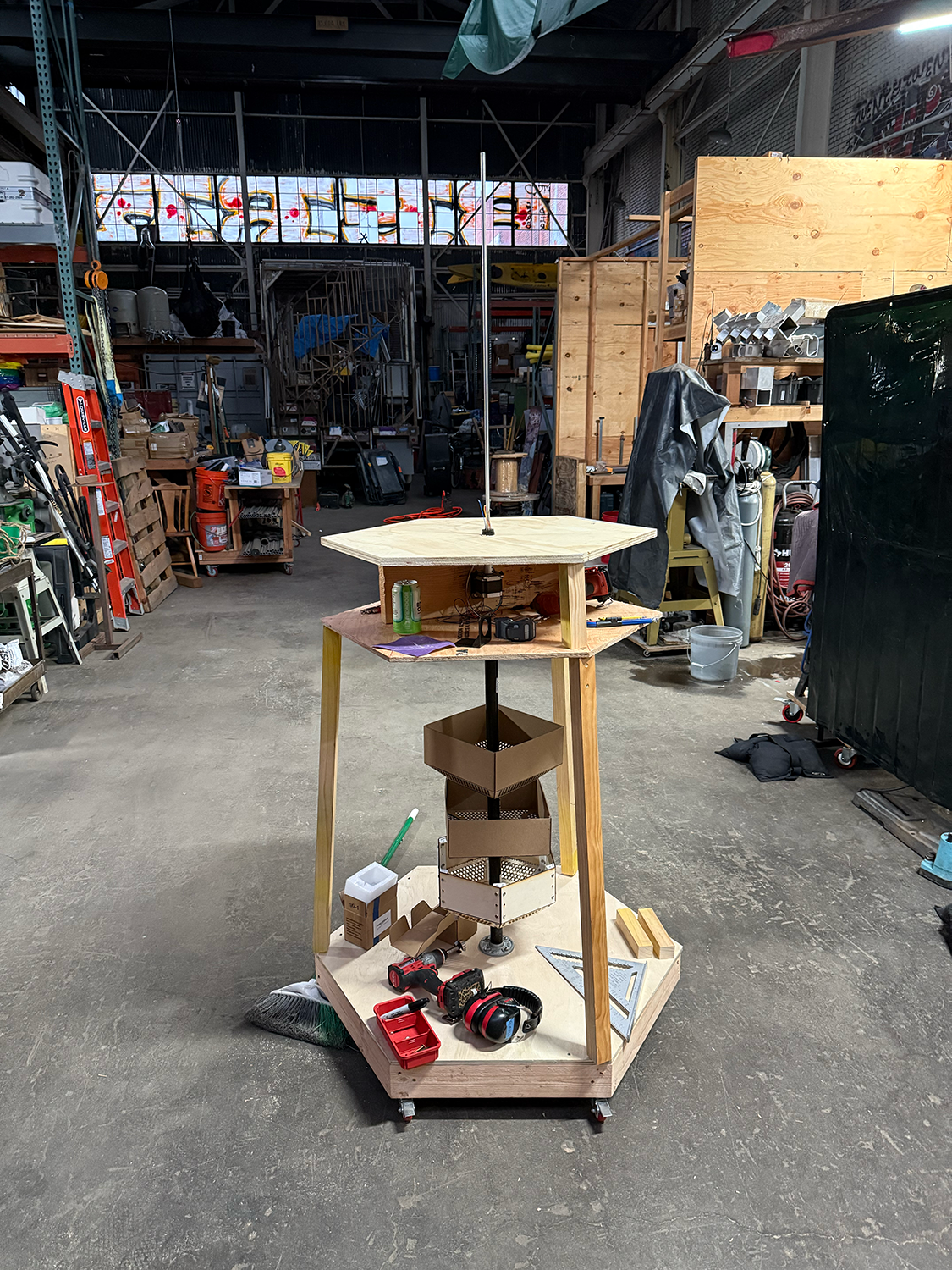
I designed and created props for Shotgun Players Theater’s production of this musical which premiered in November 2025. One of which is the prop, “Chromolume No. 7” - a light art sculpture made by a character in the show.
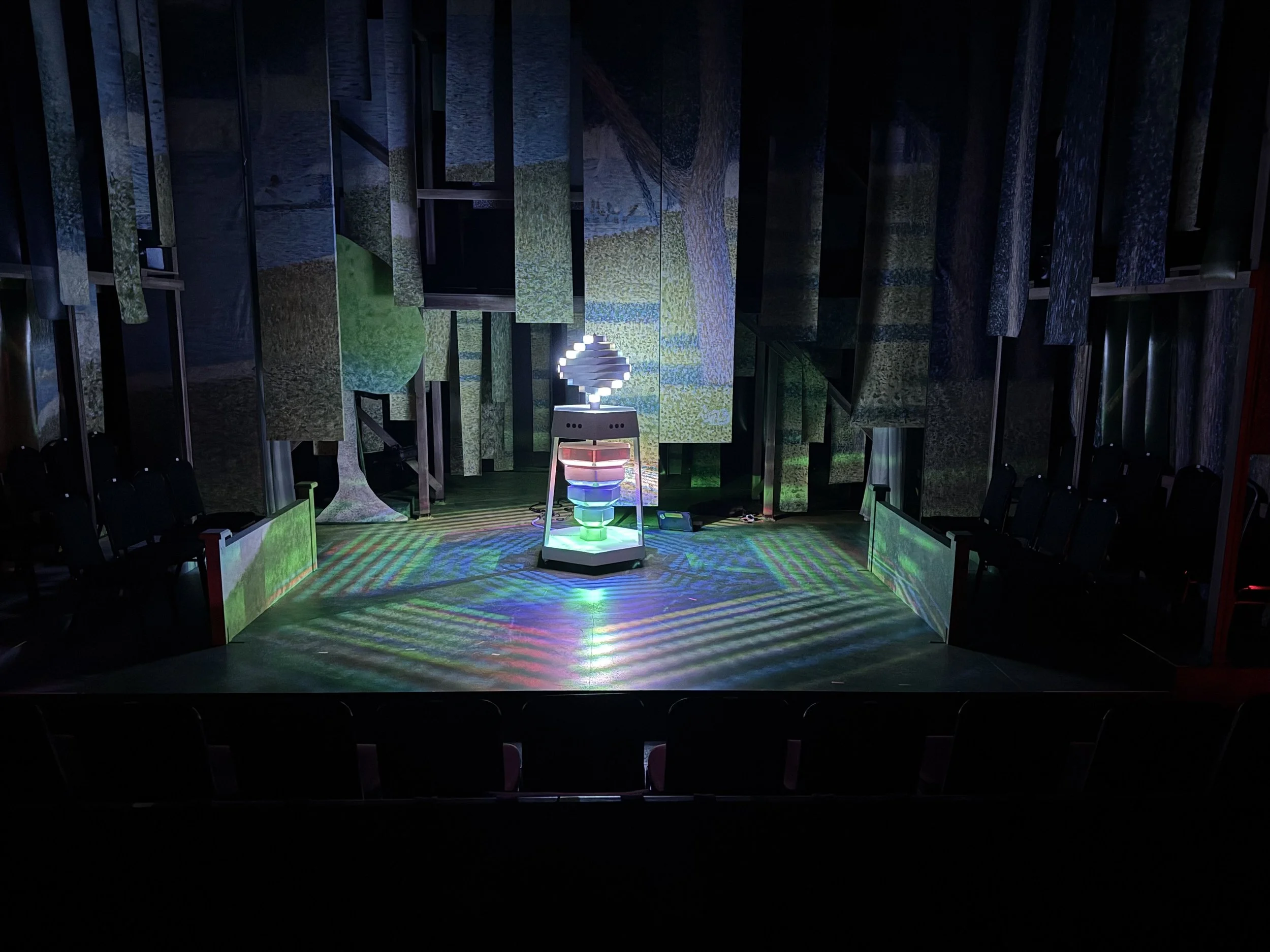
Here is the full run through of the Chromolume, with lighting design by Sophia Craven and music by Michael Kelly.
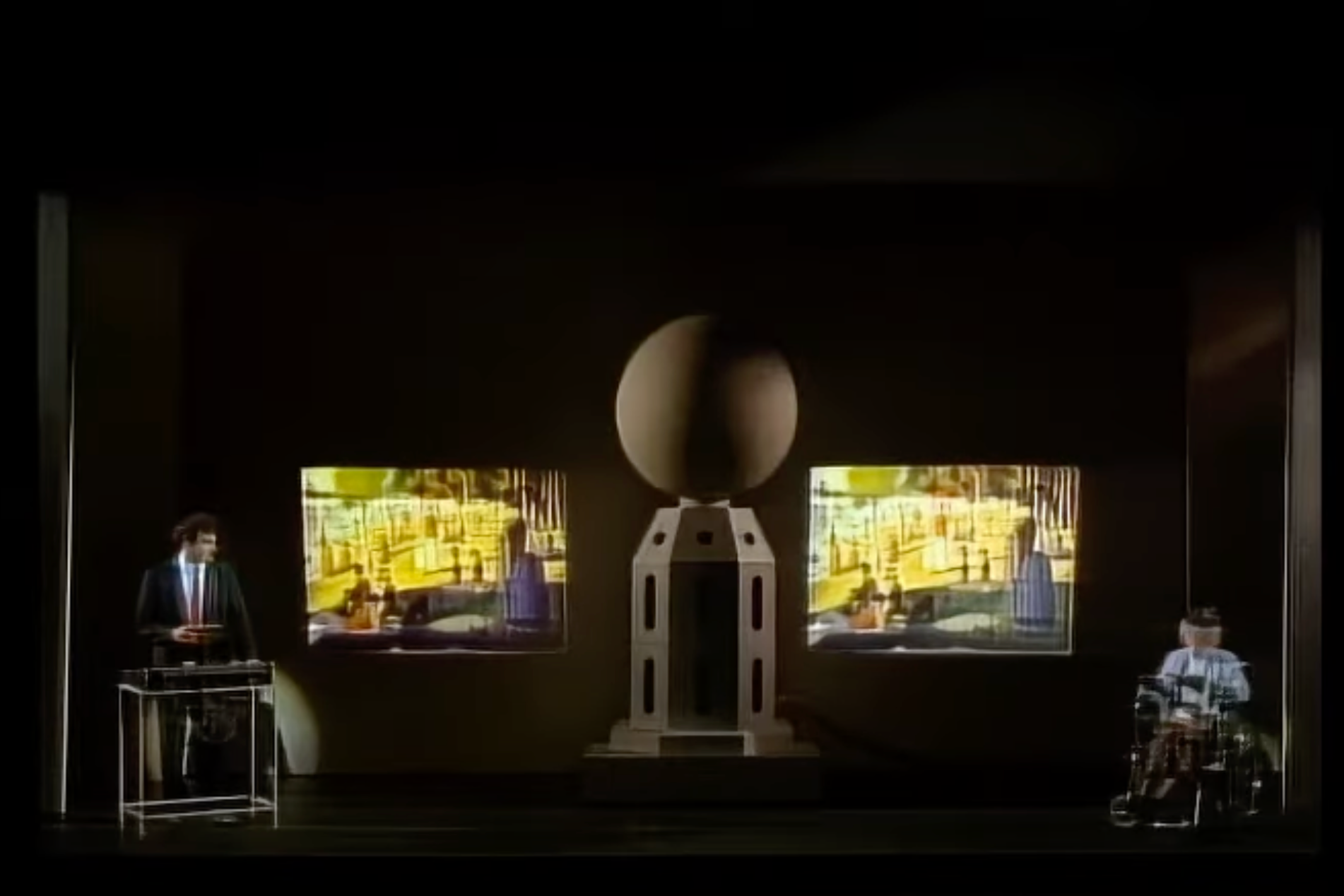
In the original production of Sunday in the Park with George, they created one of the first instances of projection mapping - “painting with beams of light” - they were able to project the images of George Seurat’s paintings onto the sphere of the Chromolume, which was a novel invention at the time. Where George Seurat explores the science of color perception with pigment, “Young George” (as we call him) explores the science of color perception with light.
In my art practice, I explore optical illusions and viewer perception with light, shadow, and movement. I like to create things that highlight the hidden magic of the world around us. In reading the libretto and other papers on the Chromolume (link), I was fascinated with how this musical hints at the science and perception of color and light. I wanted the Chromolume to be able to demonstrate the essence of what both George’s are trying to communicate - how freaking cool the science of color and light is!!
Artist Statement
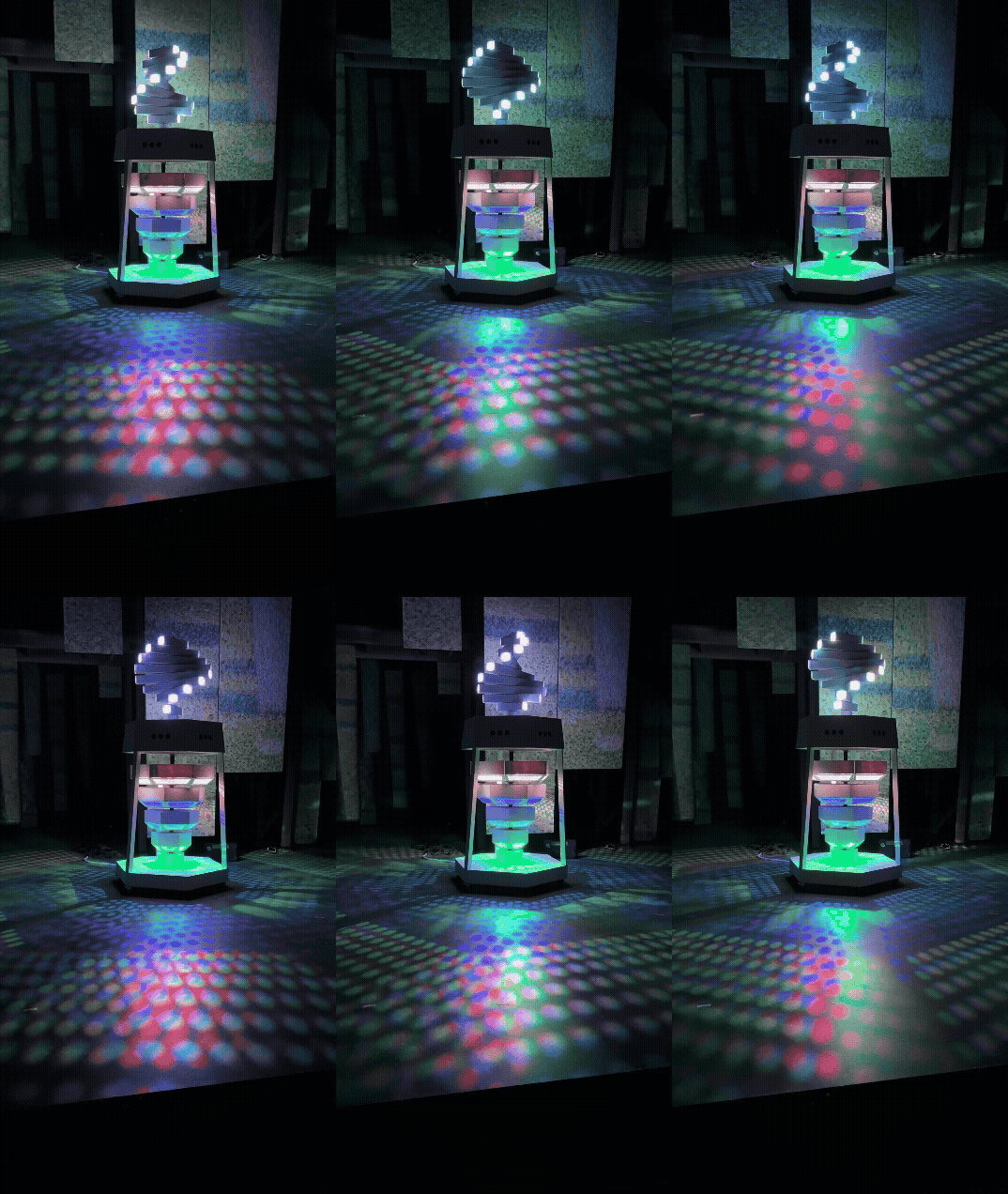
“Colors begin to fill the stage and the audience, creating a pointillist look”
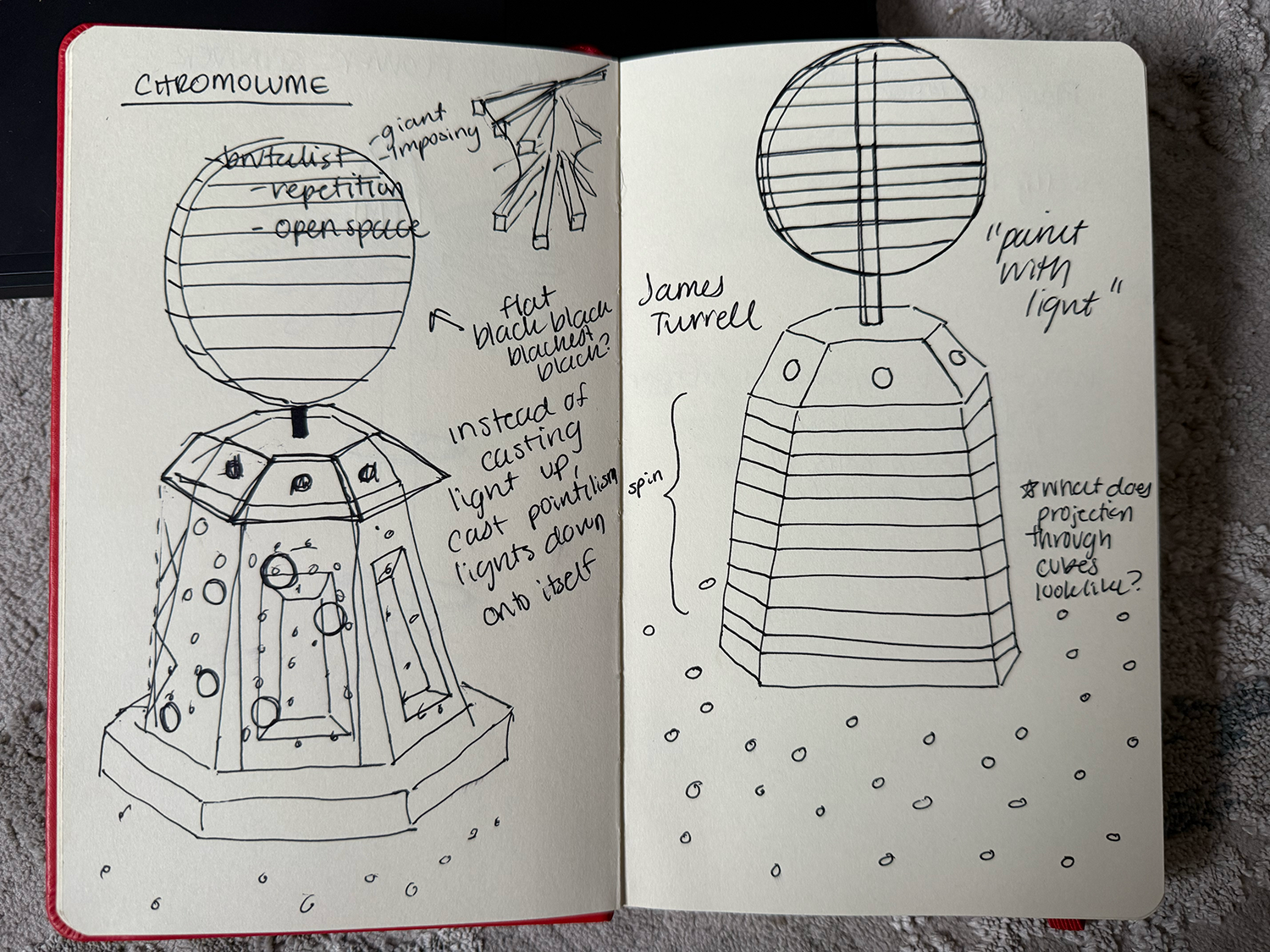
I’d like viewers to notice that no direct white light is used in the Chromolume. With the use of directed light and shadows, the Chromolume demonstrates how colored beams of light are used to create different colors individually, and white all together. When the Chromolume projects light onto the floor, one can see the pointillism that makes up white light - Red, Green, and Blue light, and their respective mixed colors, Yellow, Cyan, and Magenta.
“The sphere begins to turn, sending out a blinding burst of light”
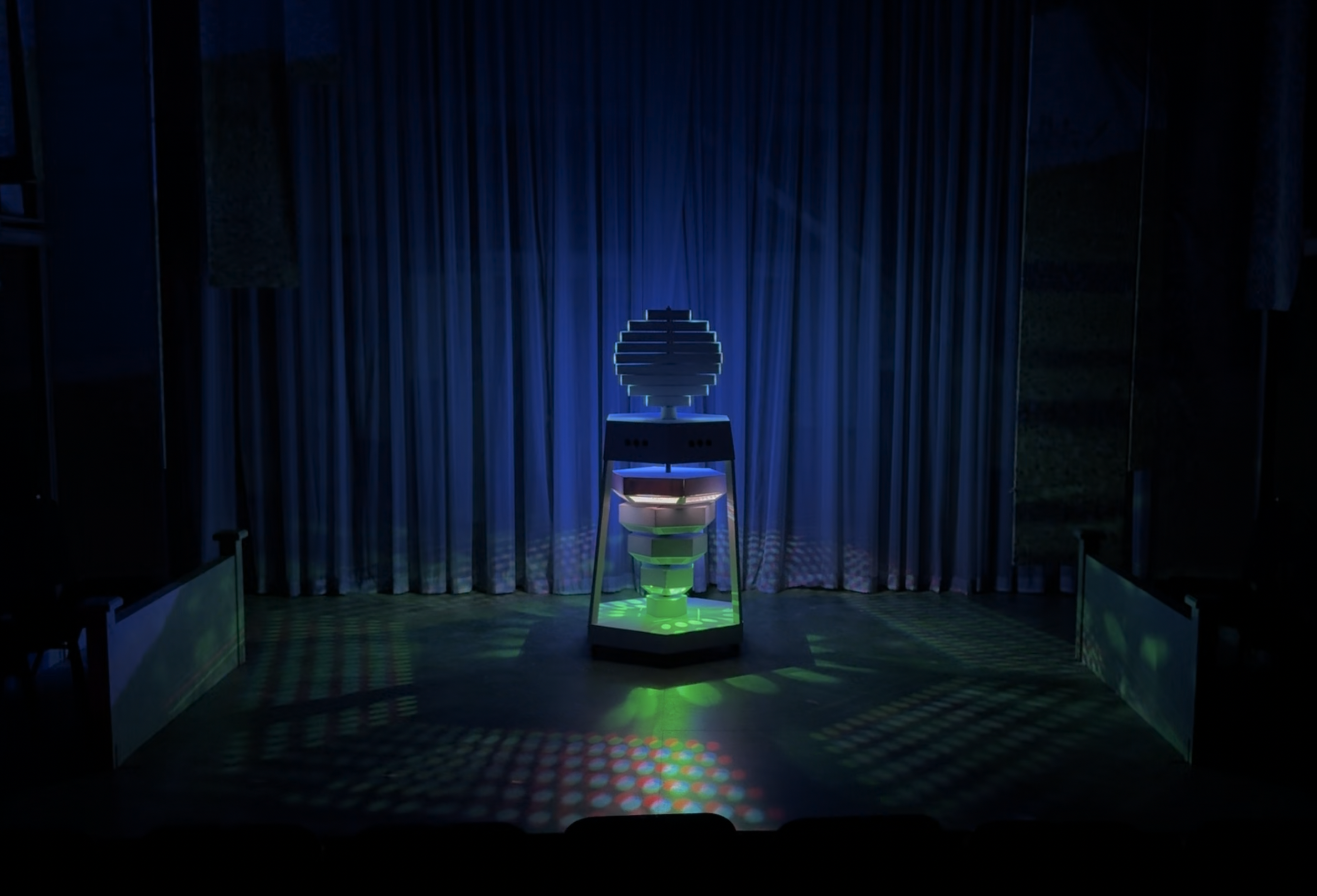
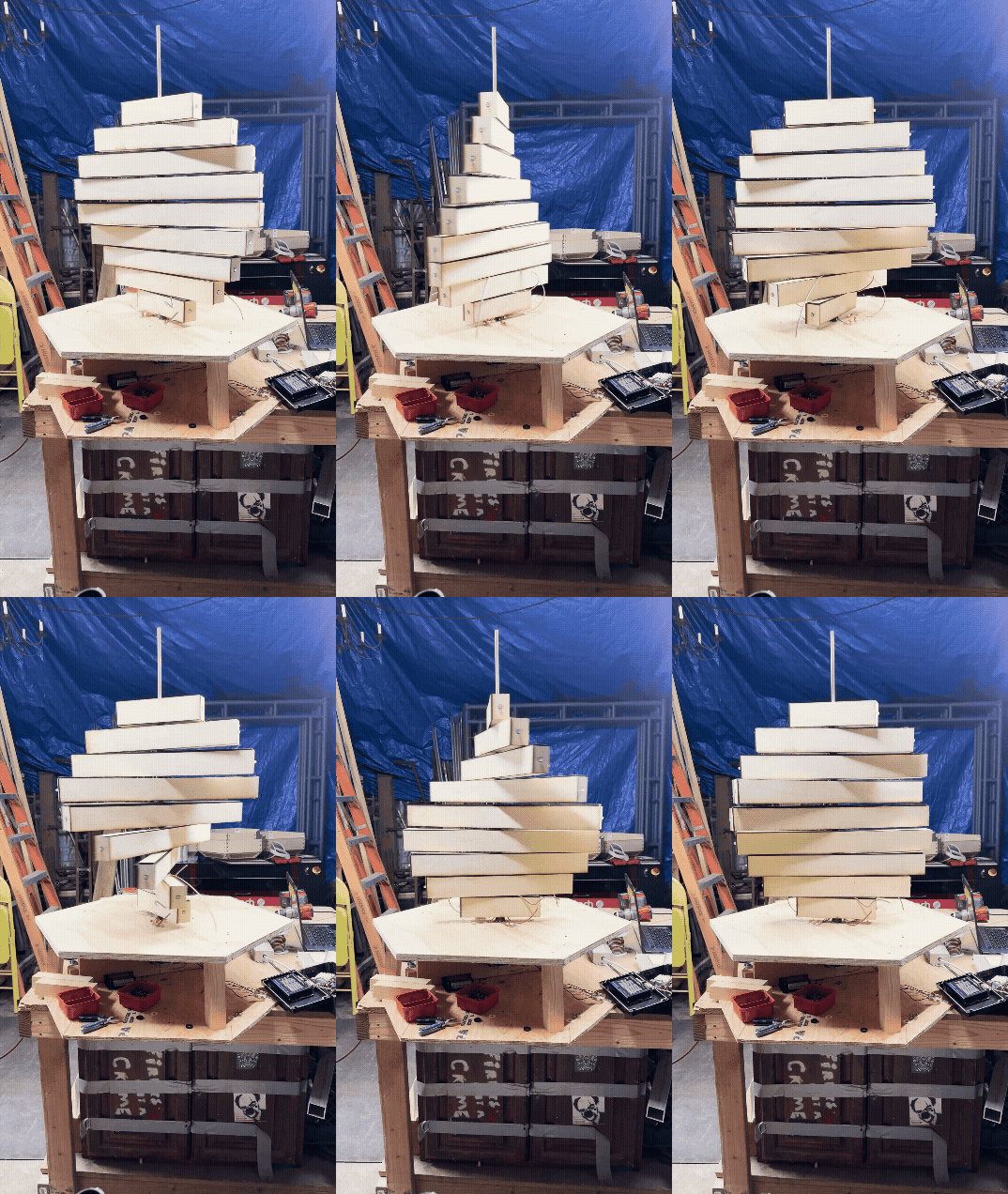
And through quick movement of those colors, our eyes can perceive white light, and also see individual colors in your vision, much like in the painting.
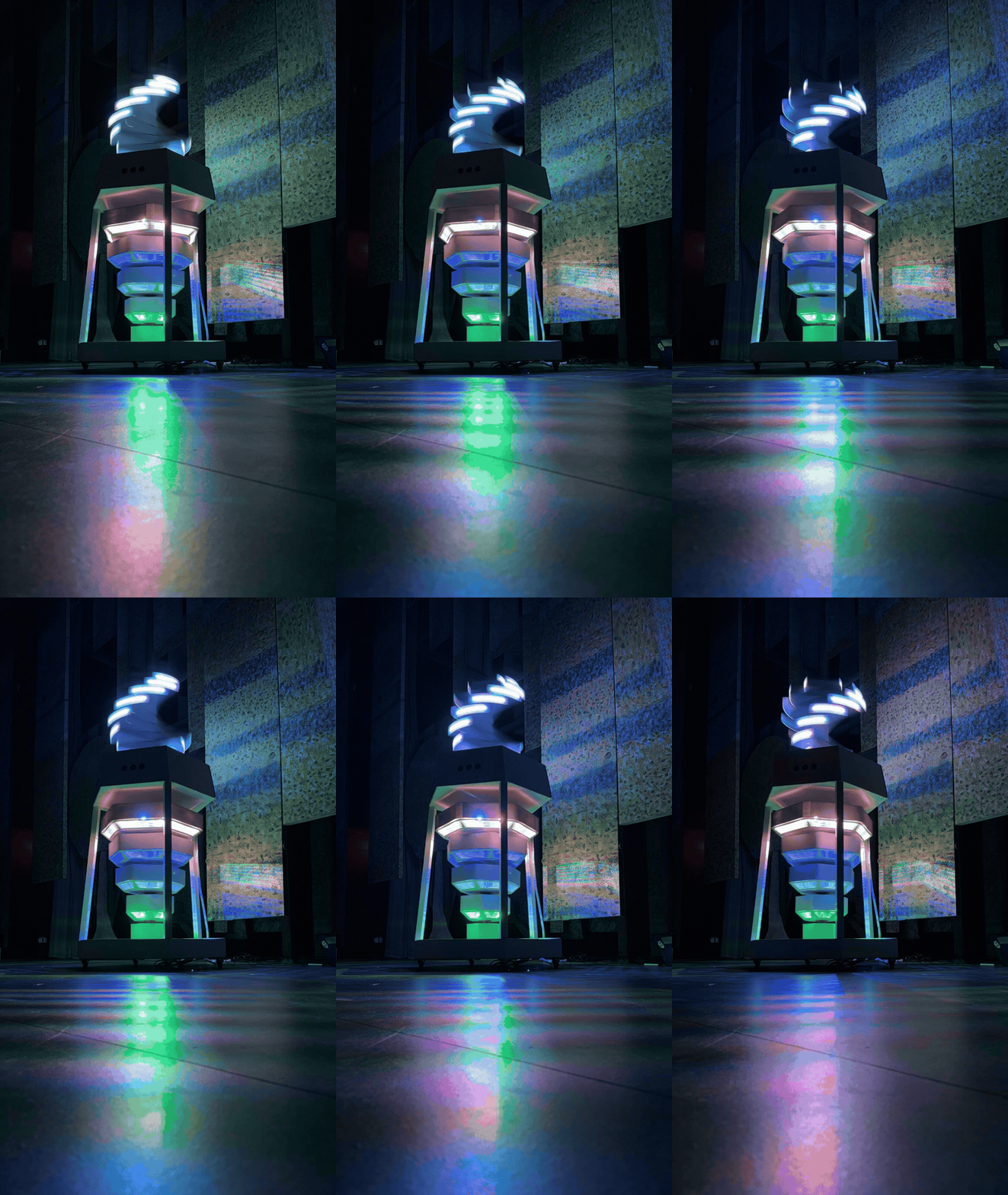
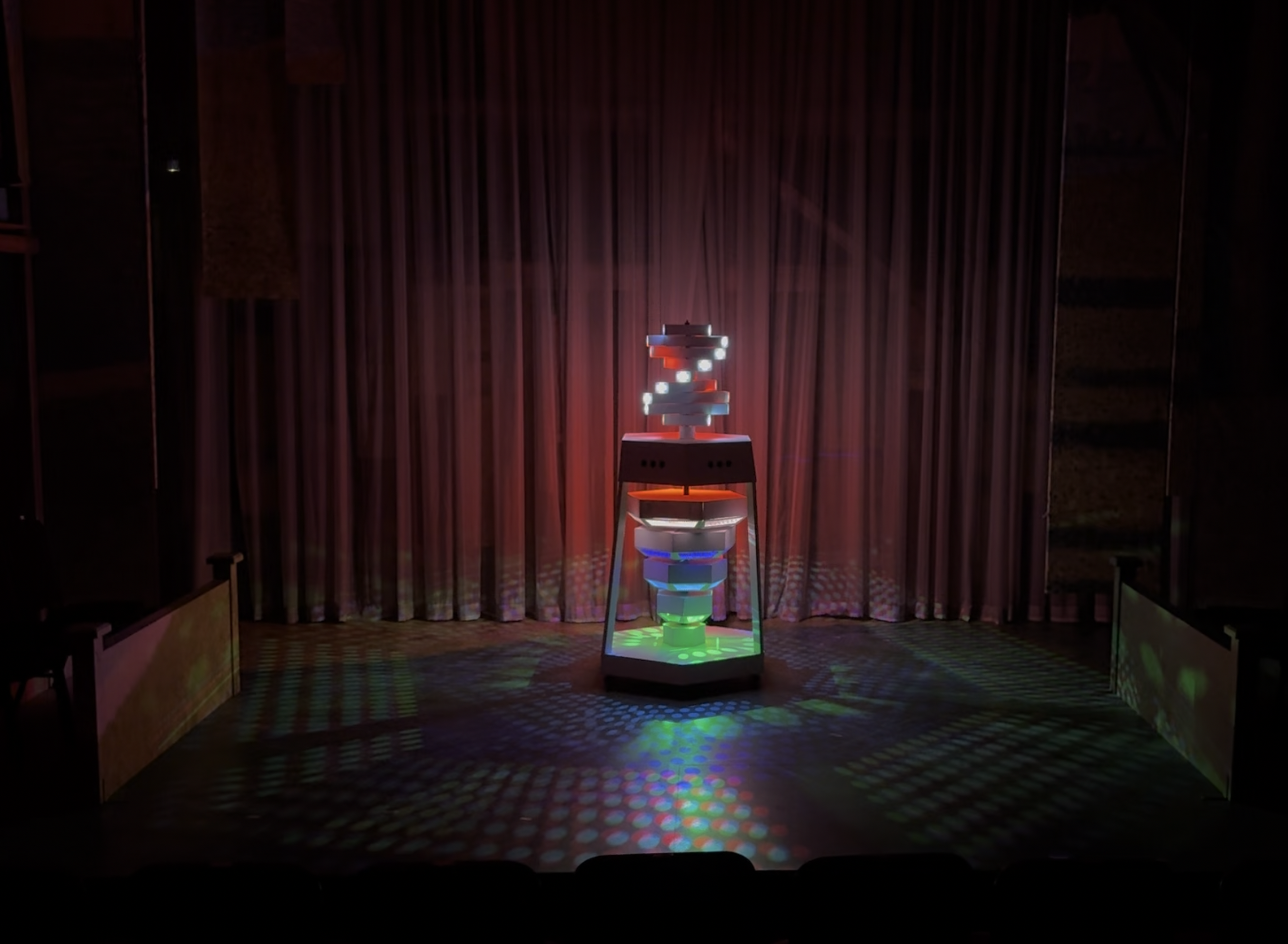
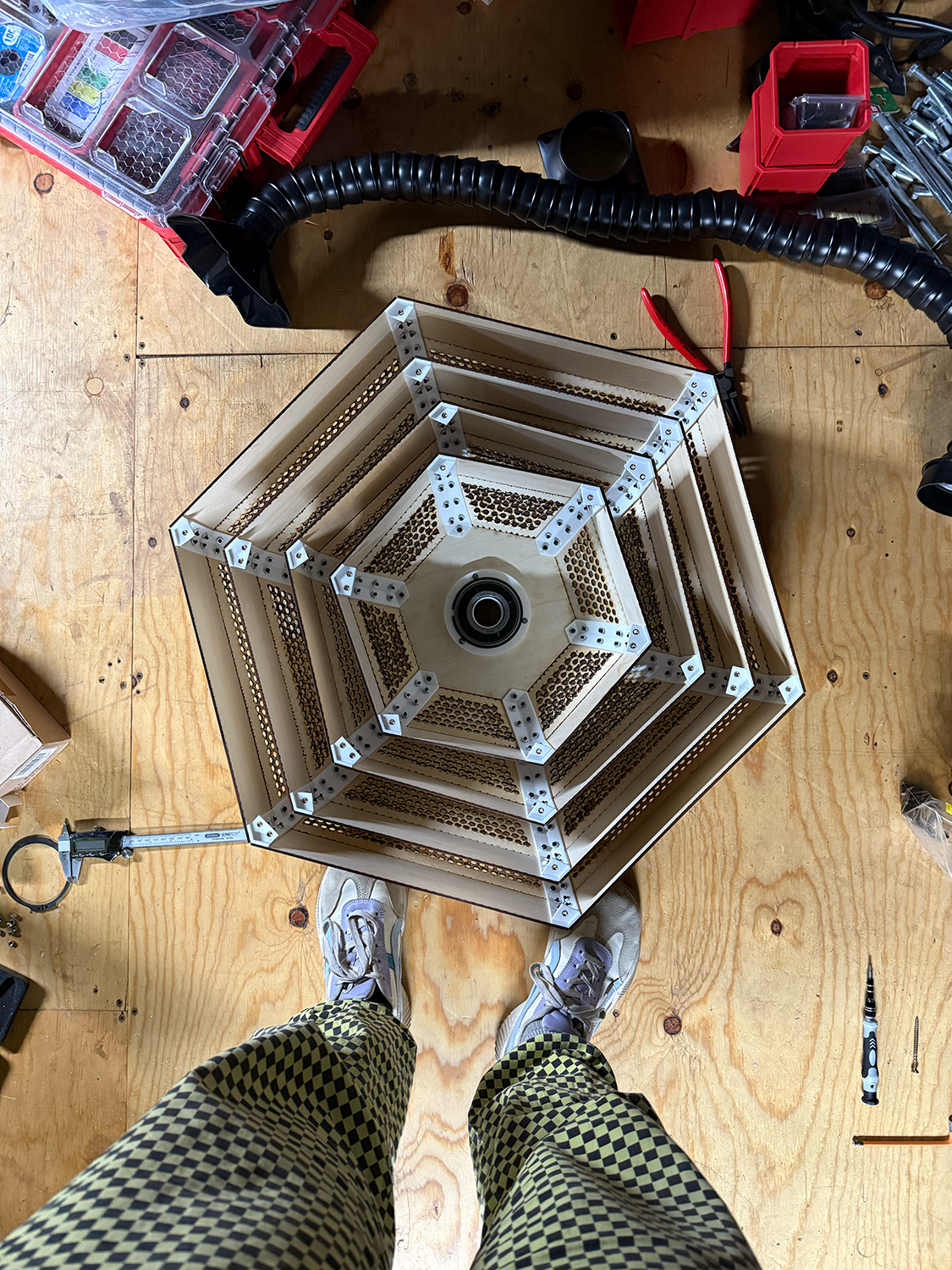
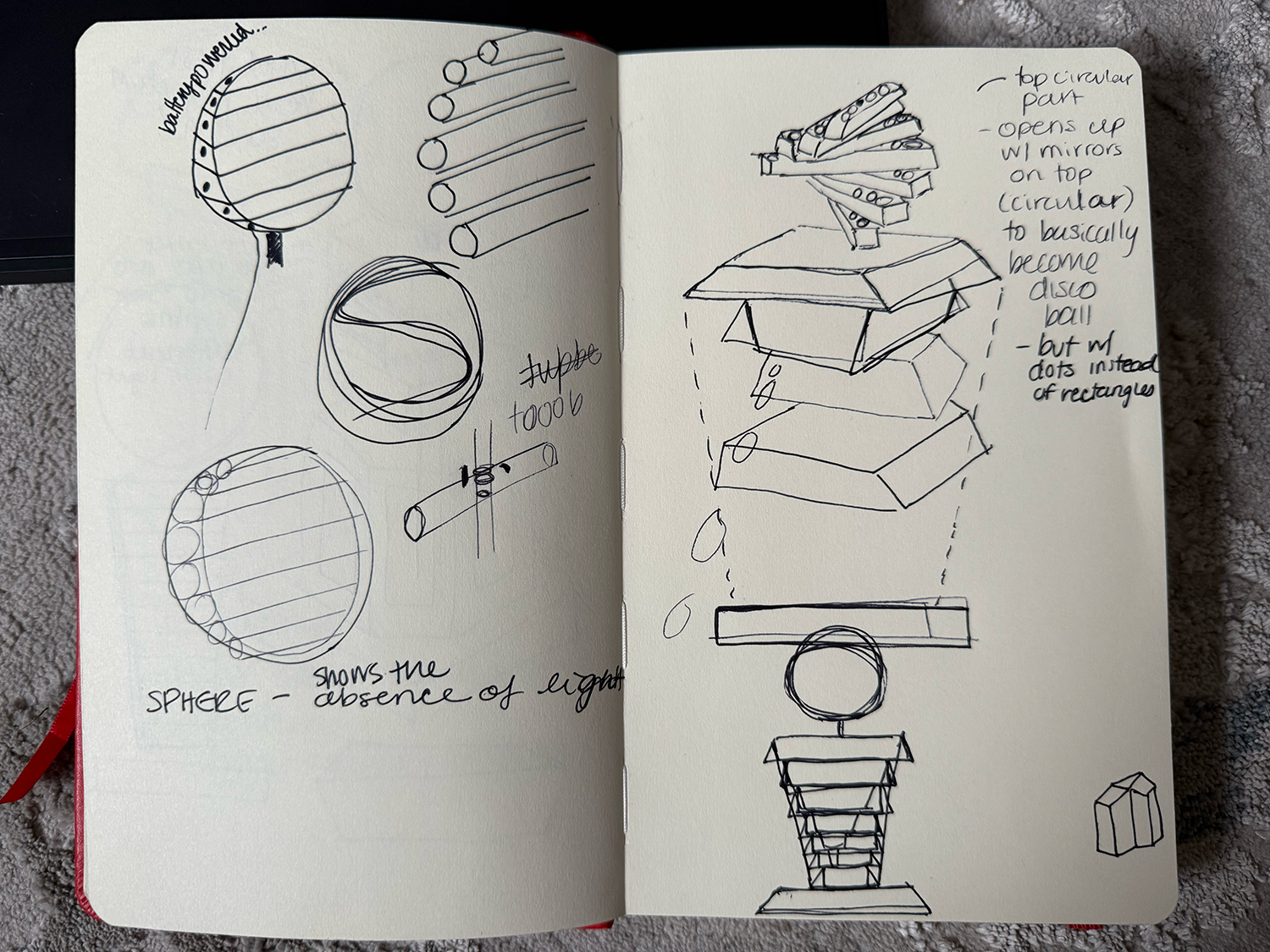
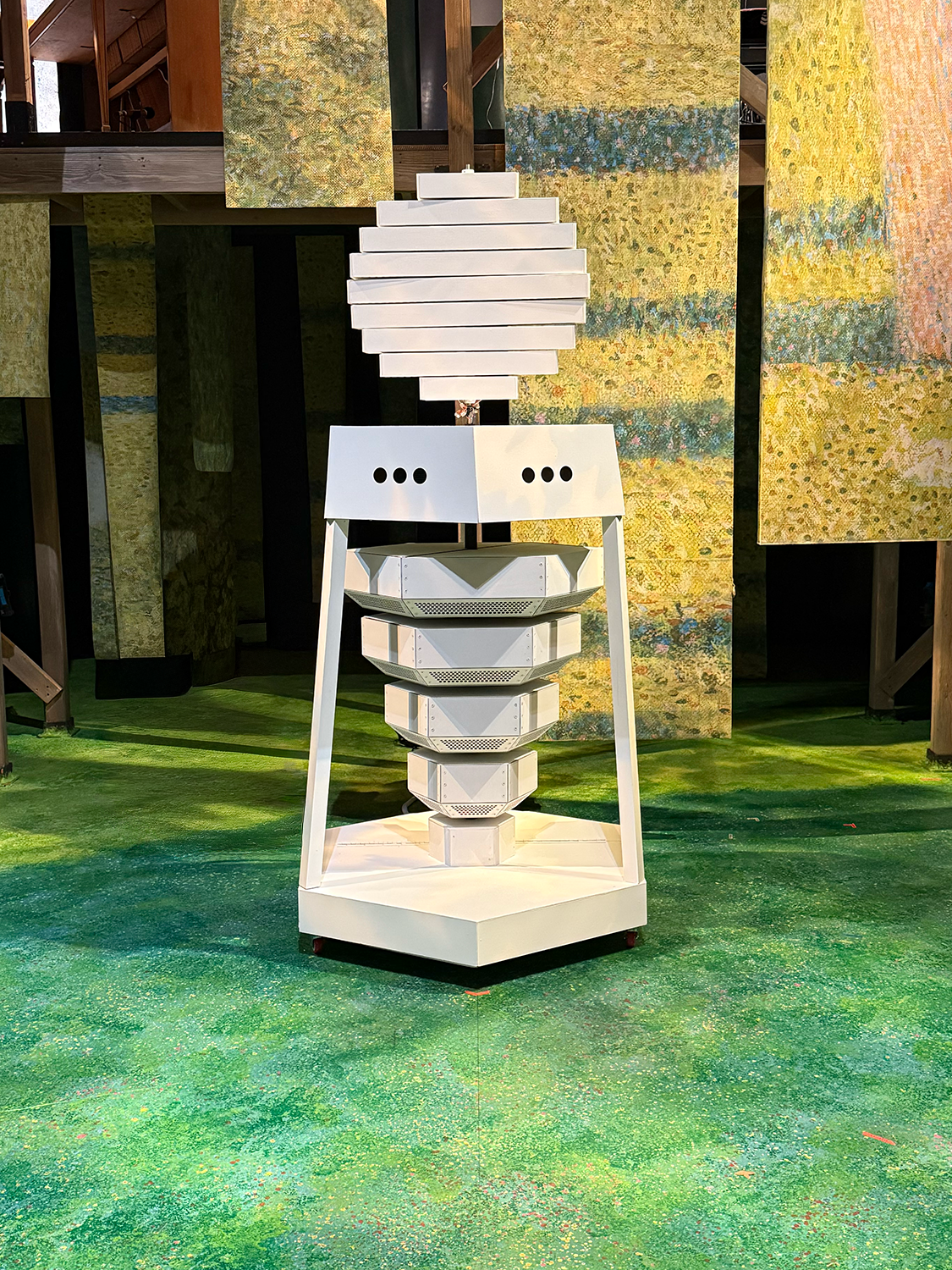
The shape of the Chromolume mirrors that of the original production, albeit sized down to fit the Ashby stage. Susannah and I had extensive discussions about what the Chromolume should feel like, and we talked about the influence of Brutalism. In my research, I felt connected to the signature points of what makes something Brutalist - repetition, movement, and having open/blank space.
“The machine is post-modern in design and is dominated by a four-foot-in diameter sphere at the top.”
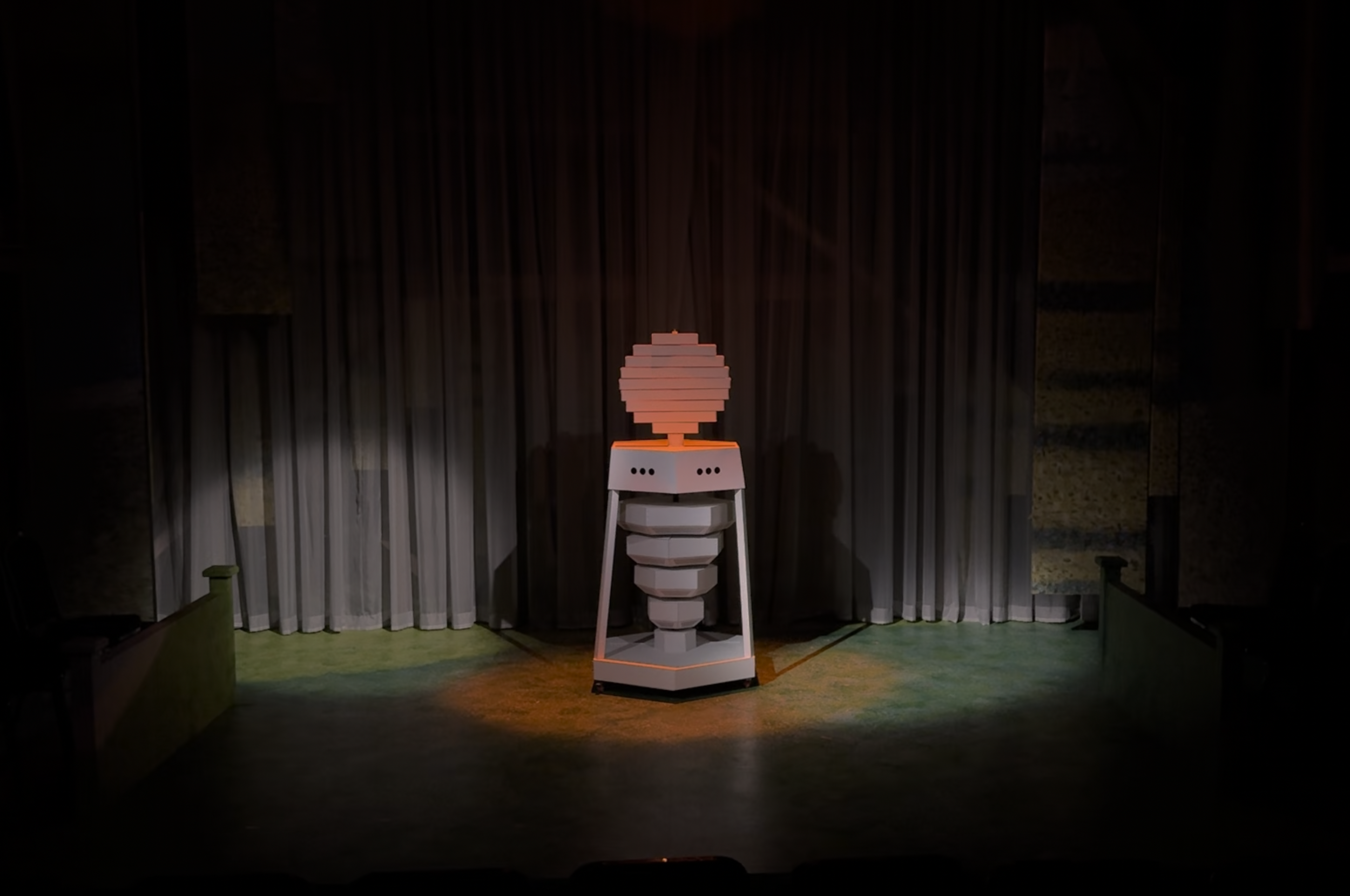
Chromolume with stage lighting by Sophie Craven
Chromolume from the 1984 Production, clip from YouTube